C-UAS · Hard-Kill Interceptor
The Low-Altitude Defense System is a series of ducted-fan powered aerial vehicles specifically designed to counter "low, slow, and small" (LSS) unmanned aircraft. It features a standardized architecture, low cost, and high cost-effectiveness. The product family encompasses mobile, fixed-site, and man-portable configurations.
The effectors can be launched from ground-fixed positions, vehicles, aircraft, surface vessels, or by an individual soldier using a shoulder-launched method. The mobile, airborne, shipborne, and fixed-installation variants are primarily employed to engage medium/small unmanned aerial vehicles (flight altitude < 2,000 m, speed < 200 km/h, takeoff weight < 200 kg), light ground vehicles, small unmanned surface vessels, and dismounted personnel. The man-portable variant is optimized for neutralizing hovering or slowly moving small drones within visual line of sight.
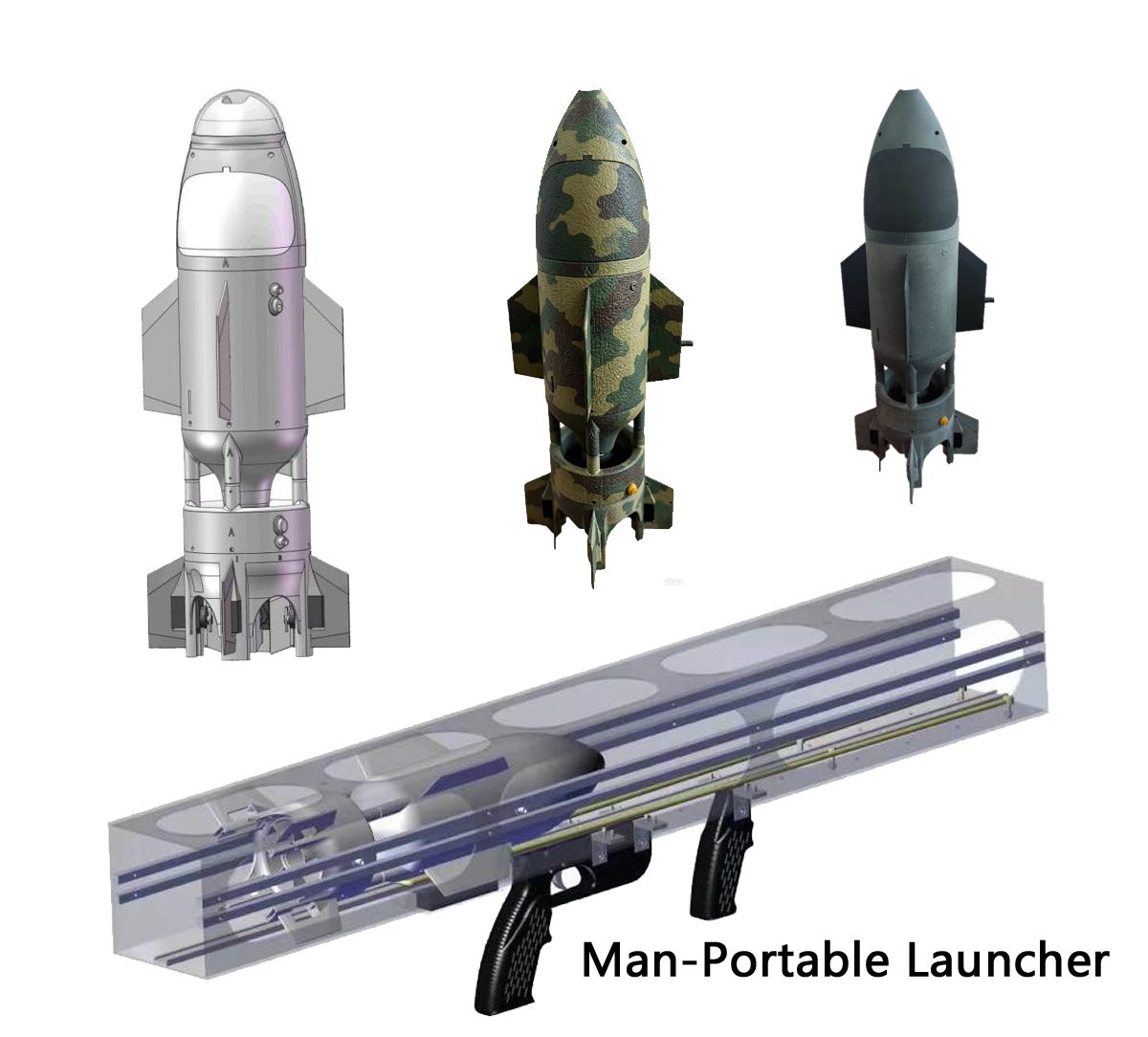
The system accommodates multiple warhead configurations -including net-gun capture, blast-fragmentation, and armor-piercing -to satisfy diverse target engagement requirements.
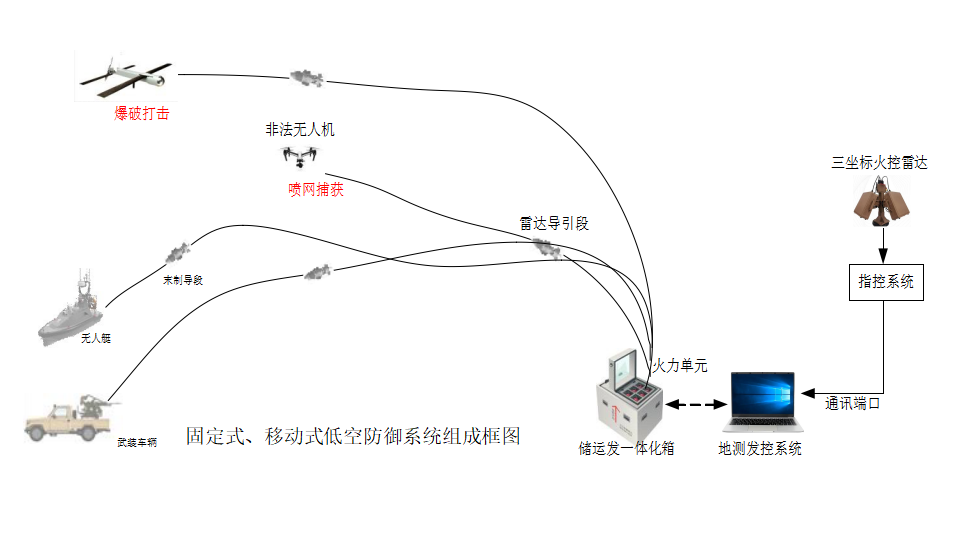
The system primarily consists of a target indication subsystem, an integrated storage/transport/launch canister, a ground test & launch control subsystem, and the electric-propulsion interceptor (hereinafter "interceptor").
Relies on fire-control radar or other surveillance sensors to supply real-time target coordinates.
Provides protection during storage and transportation, along with temperature conditioning for the interceptor.
Performs interceptor self-test, target assignment, parameter loading, and launch sequencing.
The core effector of the entire system. Engagement modes include blast and net-capture; the interceptor is recoverable and reusable after neutralizing a UAV target.
Man-Portable Configuration -consists of a portable launch tube and the interceptor. Target detection is performed visually by the operator. Once the onboard seeker locks onto the target, the interceptor can be launched. It tracks the target to close proximity and neutralizes it through blast, net-gun deployment, or kinetic impact. When net capture is employed, the electric-propulsion interceptor performs an autonomous controlled descent for recovery after the engagement.
| Parameter Category | Specification | Type 70 Data | Type 90 Data |
|---|---|---|---|
| Interceptor Performance | |||
| Dimensions | Body size | Ø472 × 112 mm | Ø540 × 120 mm |
| Max speed | Velocity | 65 m/s (234 km/h) | 75 m/s (270 km/h) |
| Launch mode | Orientation | Vertical omnidirectional | Vertical omnidirectional |
| Flight range (mobile) | Distance | > 5 km | > 9 km |
| Max engagement altitude | Ceiling | > 2 km | > 3 km |
| Flight endurance | Time | 150 s | 200 s |
| Launch azimuth | Coverage | 360° | 360° |
| Interceptor mass | Weight | 1,300 g | 3,200 g |
| Engagement method | Defeat mechanism | Net capture / Blast | Net capture with parachute / Blast |
| Payload capacity | Warhead mass | 300 g | 800 g |
| Miniature Seeker Parameters | |||
| Detection range (typical targets) | Performance | DJI Mavic 2 series: 150 m Fixed-wing (1.2 m wingspan): 400 m | Light truck (6 m): 500 m USV (7 m): 800 m |
| Image sensor | Type | Domestic CMOS module | Domestic CMOS module |
| Focal length | Optics | 12 mm | Dual-axis stabilized zoom |
| Field of view | FOV | 30° × 20° | 30° × 20° |
| Resolution | Imaging | Visible: 2048 × 1280 px | IR: 320 × 240 px |
| Guidance & Control Parameters | |||
| Image processing rate | Frame rate | 30 fps | |
| Seeker output | Data | Gimbal angles, line-of-sight angles, LOS angular rate | |
| Guidance mode | Scheme | INS + Satellite + Command + Optical | |
| Radio operating frequency | Communication | 860 -915 MHz | 1.1 -1.4 GHz |
| Operational condition | Day/Night | Day | Day & Night |
| Environmental Parameters | |||
| Ingress protection | Waterproof | IP65 (integrated storage waterproof rating) | |
| Operating temperature | Range | -30 °C to +60 °C | |
| Storage temperature | Range | -40 °C to +80 °C | |
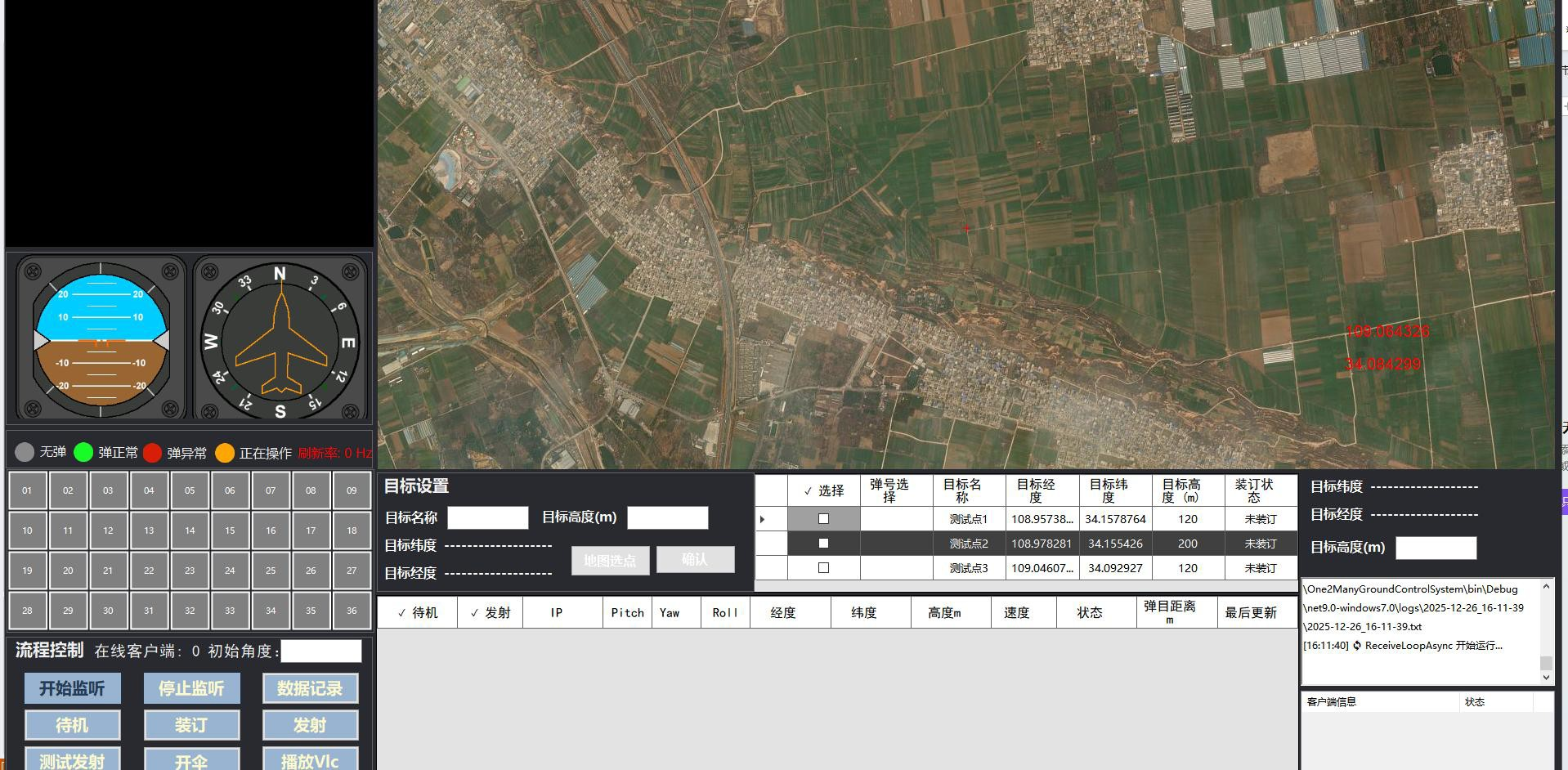
The ground test & launch control software provides core functions including target reception, interceptor self-test, launch execution, data recording, and engagement effectiveness evaluation. For the man-portable variant, only a smartphone-based interface is used to monitor seeker target lock; after launch, no further operator intervention is required.

The system primarily consists of a target indication subsystem, an integrated storage/transport/launch canister, a ground test & launch control subsystem, and the electricpropulsion interceptor (hereinafter referred to as the interceptor-.
The target indication system relies on firecontrol radar or other surveillance sensors to supply realtime target coordinates.
The integrated storage/transport/launch canister provides the electricpropulsion interceptor with storage, transportation protection, and body temperature conditioning.
The ground test & launch control subsystem performs interceptor selftesting, target assignment, parameter loading, and launch control.
System Diagram of the Rocket-Interceptor Counter-DAS Equipment
Vehicle-Launched Interceptor
Frame-byframe Playback of Engagement Video Footage
Frame-byframe Playback of Engagement Video Footage